Mobile loyalty cards are dead
Plastic loyalty cards and punch-card booklets are relics. They don't drive engagement or retention. Mobile loyalty apps have completely changed the game.
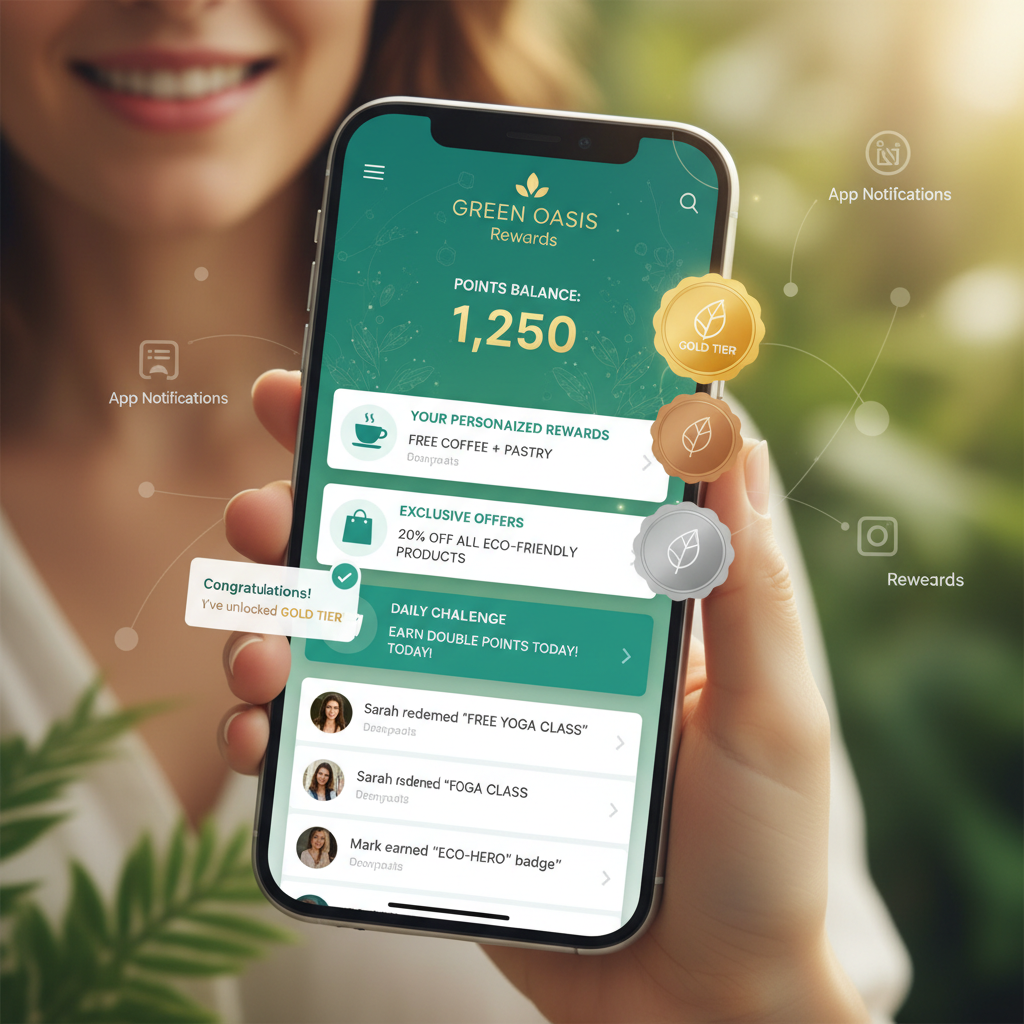
Brands like LIDL Plus, Starbucks Rewards, and Rossmann Club have proven the model. Apps deliver:
- Instant point tracking
- Personalized rewards
- Location-based offers
- Exclusive early access to deals
The engagement numbers are staggering
A recent study by H2H.tech reveals that mobile loyalty apps achieve 84% engagement rates. Users regularly check point balances, view available promotions, and redeem personalized rewards.
For comparison:
- Traditional plastic card programs: 15-30% engagement
- Email-only loyalty: 20-40% engagement
- Mobile apps: 84% engagement
The difference is massive. An app keeps your brand at the top of mind constantly.
Why mobile loyalty apps win
1. Frictionless tracking
No card to carry. Users simply open the app to check points, see available rewards, and understand their status. This convenience drives frequent engagement.
2. Personalized rewards
Apps use behavioral data to tailor offers. If a customer frequently buys coffee, the app suggests coffee discounts. If they shop on Sundays, Sunday-exclusive deals appear when they might shop.
This personalization makes customers feel understood—and increases purchase frequency.
3. Push notifications
A well-timed push notification reminding a user about available points or a limited-time offer can trigger an immediate purchase. No other channel achieves this precision timing.
4. Location-based targeting
The app knows when a user is near a store location and can send location-triggered offers. "You're 2 minutes away—here's a 20% discount valid in the next hour."
This converts foot traffic into purchases.
5. Omnichannel integration
Modern loyalty apps let users earn and redeem points across online, mobile, and in-store channels. A customer earns points on a website purchase and redeems them in-store—or vice versa.
This seamless experience increases customer lifetime value.
The business impact
Customer retention
Acquiring a new customer costs 16 times more than retaining an existing one. Loyalty apps dramatically improve retention by providing continuous value.
Lifetime value
Loyalty app users spend more, more frequently, and stay with the brand longer. The data shows repeat purchase rates increasing by 30-40% for engaged loyalty app users.
Behavioral insights
Every interaction with the app generates data: what products customers look at, what offers they redeem, when they shop, where they shop. This data allows brands to:
- Predict purchasing behavior
- Identify at-risk customers before they churn
- Segment audiences for hyper-targeted campaigns
- Optimize inventory based on customer preferences
Real-world examples
LIDL Plus
LIDL's app offers:
- Digital coupons delivered to registered customers
- Personalized discounts based on purchase history
- Exclusive cashback offers
- Real-time point tracking
Result: Rapid adoption across Europe; engagement metrics show active daily usage.
Starbucks Rewards
Starbucks' app is a masterclass in loyalty design:
- Simple point earning (1 point per $1 spent)
- Tiered rewards (Green, Gold, Platinum levels)
- Mobile payment integration
- Personalized offers based on purchase frequency
Result: Over 20 million active members, driving 50%+ of in-store transactions in key markets.
Rossmann Club
Rossmann's loyalty app:
- Real-time point balance
- Personalized product recommendations
- Seasonal promotions
- Birthday rewards
Result: Millions of active users; strong repeat purchase rates.
The shift from installation to engagement
Getting users to install the app is only the first step. The real challenge is driving ongoing engagement.
Installation ≠ Success
Many loyalty apps see high initial downloads, then engagement drops off. Users install for a discount, redeem it, then forget the app exists.
Successful apps solve this by:
- Sending regular (but not annoying) push notifications with relevant offers
- Gamifying point accumulation ("Buy 2 more items to reach the next tier")
- Offering surprise rewards to re-engage inactive users
- Creating seasonal campaigns that give users reasons to return
The data advantage
Traditional loyalty programs collect limited data: transaction history and basic demographics.
Mobile loyalty apps collect:
- Behavioral patterns: What time users shop, frequency, basket size, product preferences
- Location data: Which stores they visit, foot traffic patterns
- Engagement data: Which offers they click, which they ignore, which promotions drive action
- Device signals: Time spent in the app, feature usage patterns
This rich data allows brands to:
- Predict churn before it happens
- Personalize offers at scale
- Optimize marketing spend
- Build lookalike audiences
The omnichannel reality
Modern customers shop across multiple channels. A loyalty app must work seamlessly across:
- Online: Web purchases earn points
- Mobile: In-app purchases or mobile wallet payments earn points
- In-store: POS systems linked to the app track purchases
- Social: Exclusive offers promoted on Instagram/TikTok drive app engagement
Brands that integrate these channels successfully see significantly higher customer lifetime value.
Why this matters for growth
For e-commerce and retail brands:
- Retention beats acquisition: Keeping existing customers costs less and generates more revenue
- Data drives personalization: Better data = better offers = higher conversion
- Competitive necessity: If competitors have loyalty apps and you don't, you're already losing
- Predictable revenue: Loyal customers generate recurring, predictable purchases
The verdict
If you operate a retail or e-commerce business without a mobile loyalty app, you're leaving significant revenue on the table. The apps that succeed combine:
- Easy point tracking
- Personalized, relevant offers
- Seamless multi-channel integration
- Regular but non-intrusive engagement
- Clear path to higher-tier rewards
The 84% engagement rate among leading loyalty apps proves the model works. The question isn't whether to build a loyalty app—it's how quickly you can build one that rivals your competitors.